AETHER / Space ProgramConcept field 00

A citythat learnsto leavethe ground.

A modular hydrogen habitat—designed from cloudline prototype to orbital caravan and, one day, a Martian field base.

Descend
00 / Program thesisBuild the system before the myth

Build the city as a living system. Then teach it to travel.

The main module is not a monolith. It is a shared spine for lift, shelter, water, energy, data, movement, and repair.

Smaller modules dock when the mission needs them and isolate when the whole would be safer without them. The architecture grows by useful pieces, not spectacle.

01CollectCloud / water / solar
02ConvertPower / oxygen / hydrogen
03CirculateAir / heat / data / people
04ContinueIsolate / repair / undock
01 / Core architectureOne city / many useful edges

Main module / AETH—CITY 01

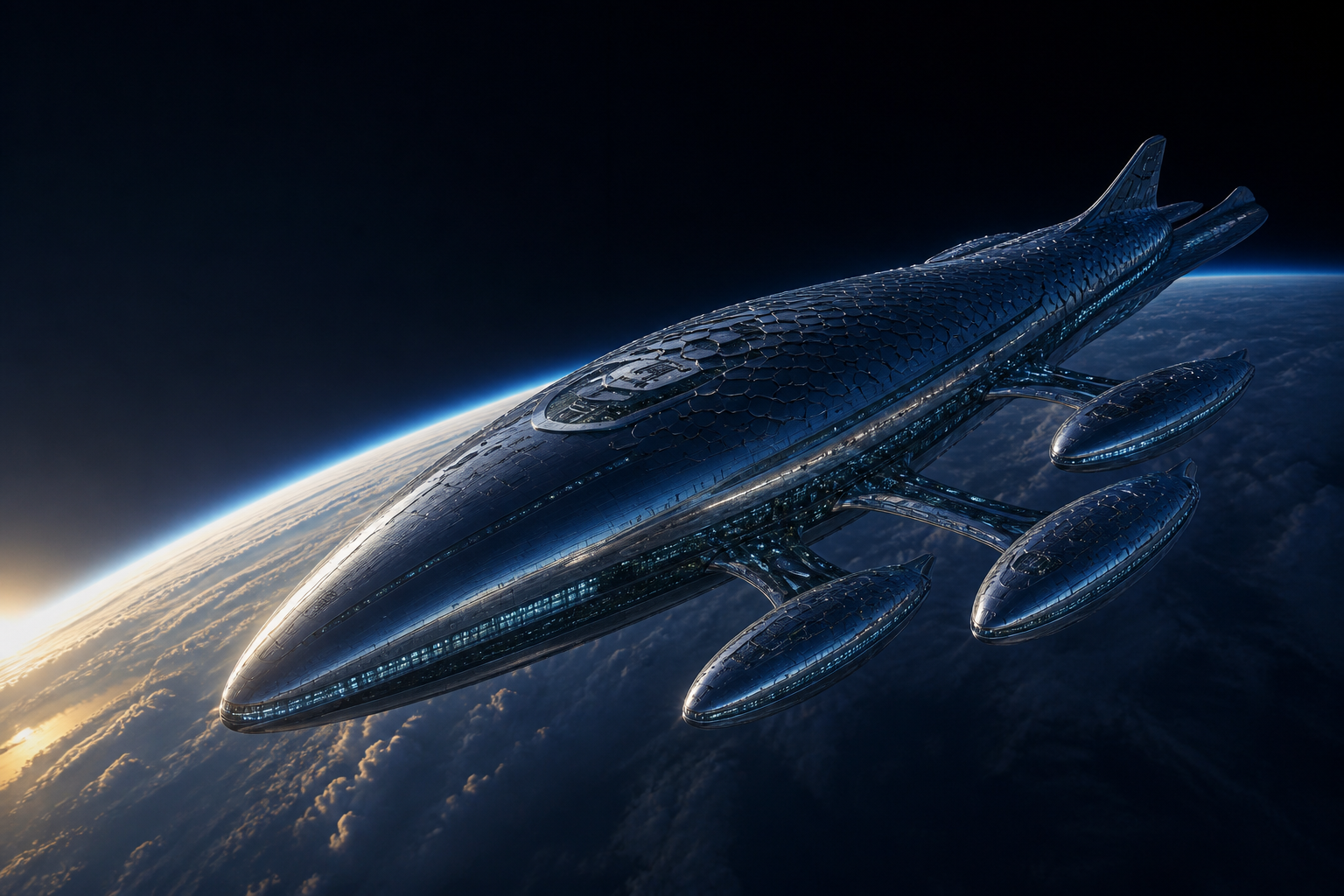
The main body is a harbor, not a throne.

A low-drag whale–manta shell holds the shared systems. Bilateral and aft ports accept smaller companions without turning the hull into a forest of permanent protrusions.
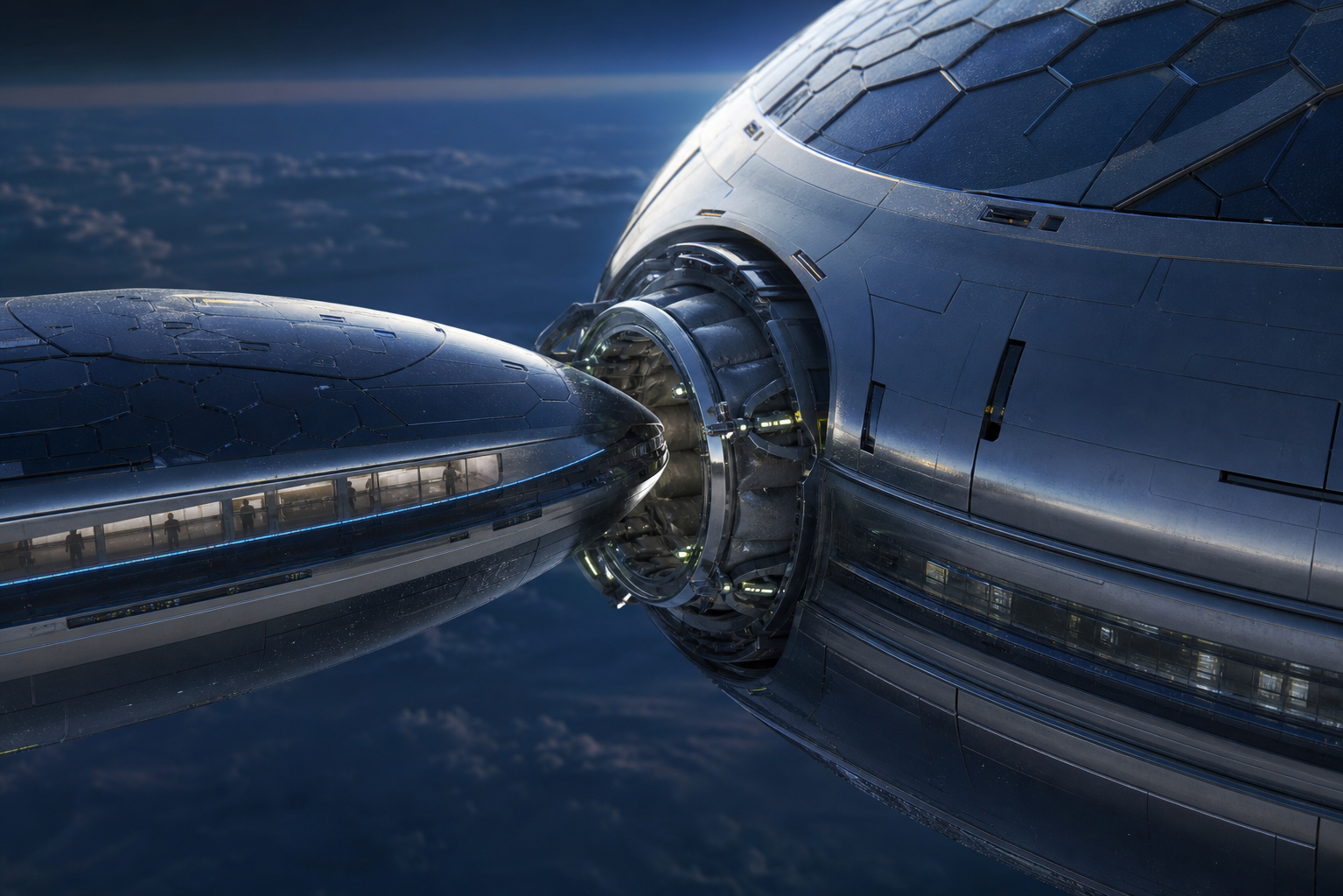
A companion module approaching the main AETHER hull docking ring
Interface study 02Original / 2026
A

Adaptive fairing

Smooth outer geometry closes around attached modules to protect the flow field.

B

Dual lock

Magnetic alignment supports mechanical capture; neither is treated as magic.

C

Sealed transfer

People and resources cross through isolated tunnels with local shutoff.

D

Shared backbone

Power, water, hydrogen, thermal control, and data meet at one legible interface.

02 / Companion modulesSelect a field role

A modular city changes loadout before it changes identity.
Five companions.
One common language.

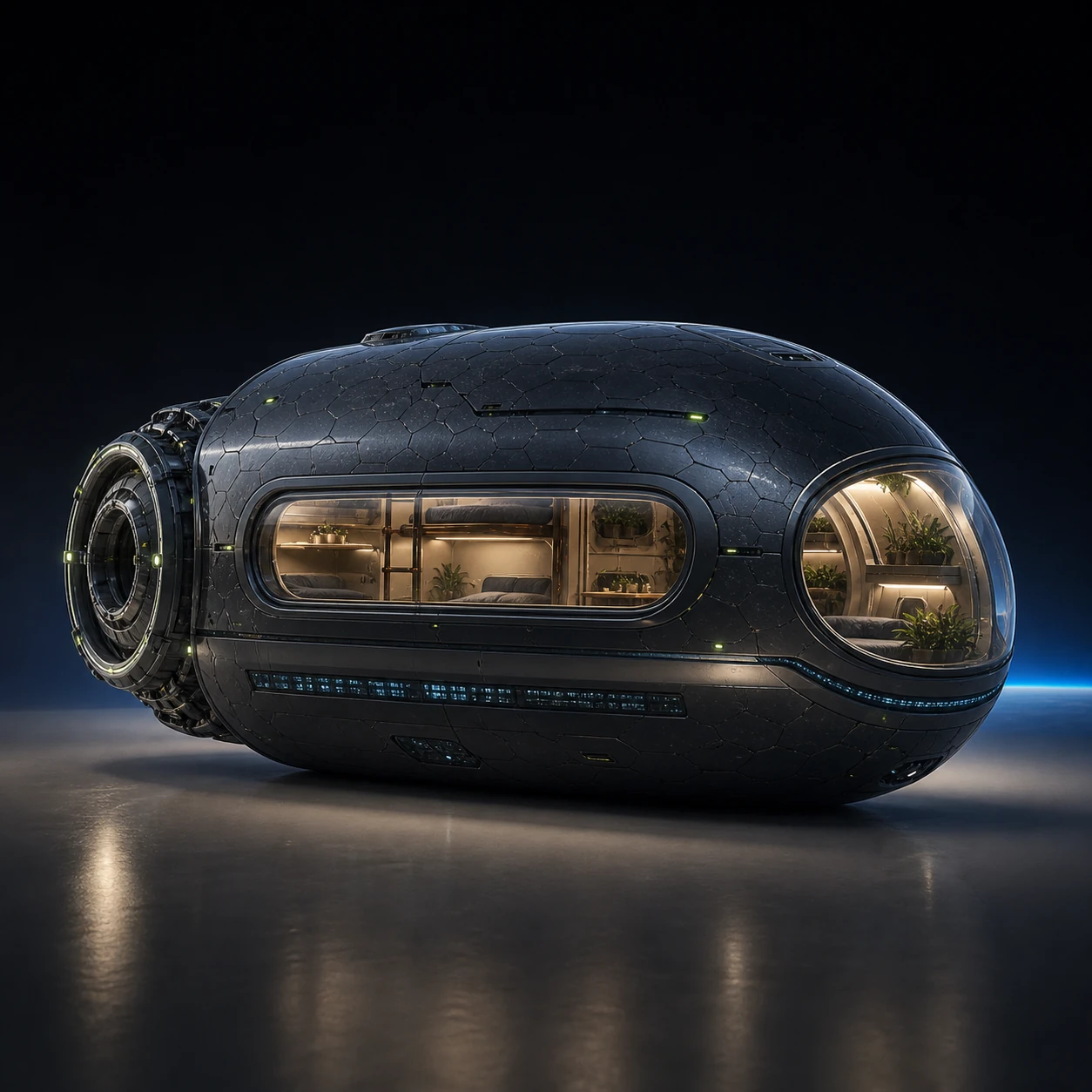
Dark graphite Habitat companion pod with a universal docking collar and warm windows revealing bunks, plants, and a shared living space

Crew / refuge

Habitat module

A quiet pressurized living field for sleep, work, recovery, and communal life. It can remain attached to the city or isolate as a protected shelter.
AirWaterPowerData
02–04crew target
03 / Sky water–hydrogen loopResource continuity / target architecture
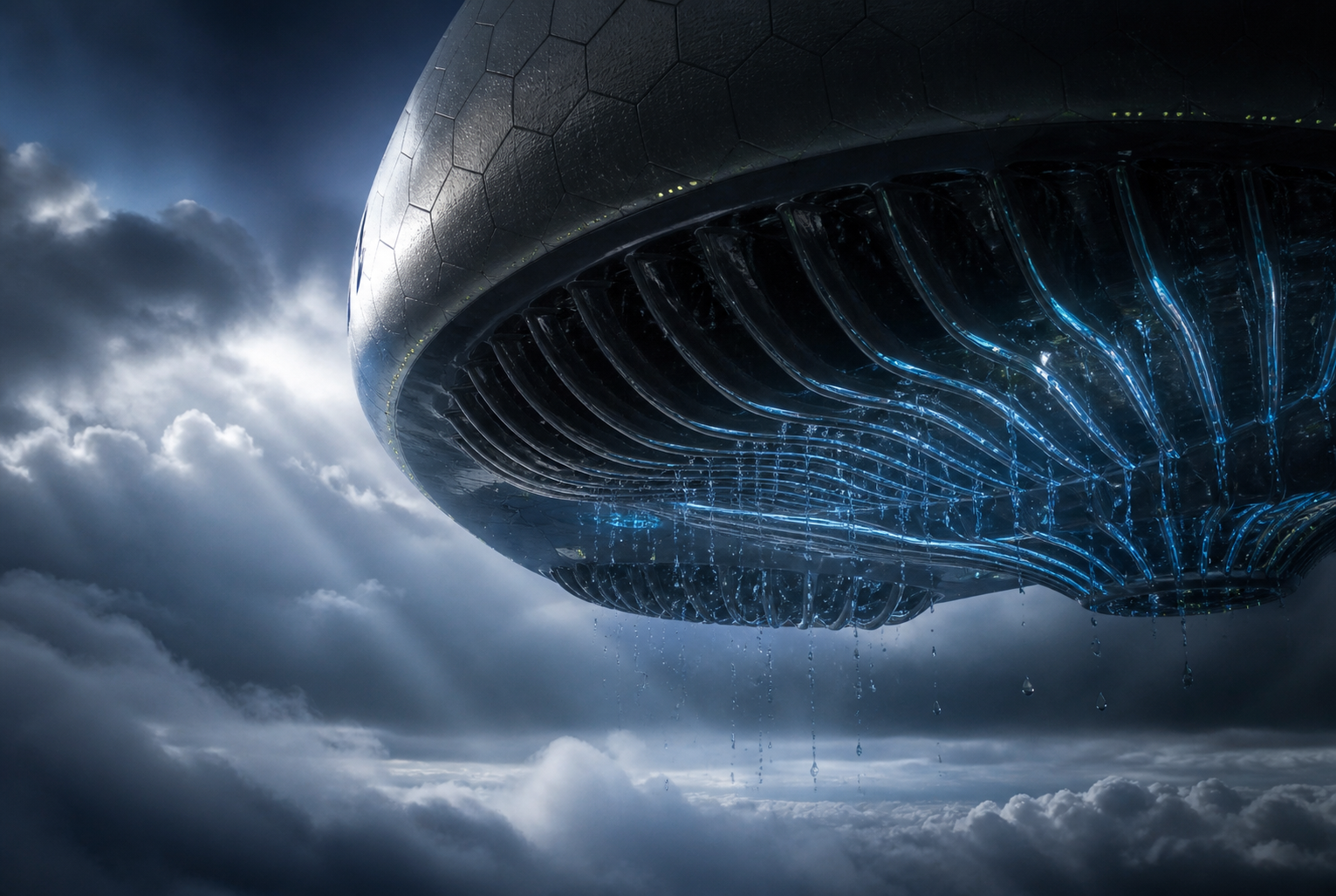
Dark cloud-gill collectors routing atmospheric moisture beneath the city

Gather what the environment can spare.

Water is the beginning of the loop—not proof that it closes.

Cloud moisture can feed treatment and storage. Electrolysis can separate oxygen and hydrogen. Fuel cells can return electrical energy and water. Every arrow still carries losses, heat, mass, maintenance, and safety work.
01CollectAtmospheric H₂O
02TreatFilter / mineral balance
03SeparateO₂ / H₂ target streams
04StorePressure / thermal control
05ReturnPower / heat / water
AETHERLiving field
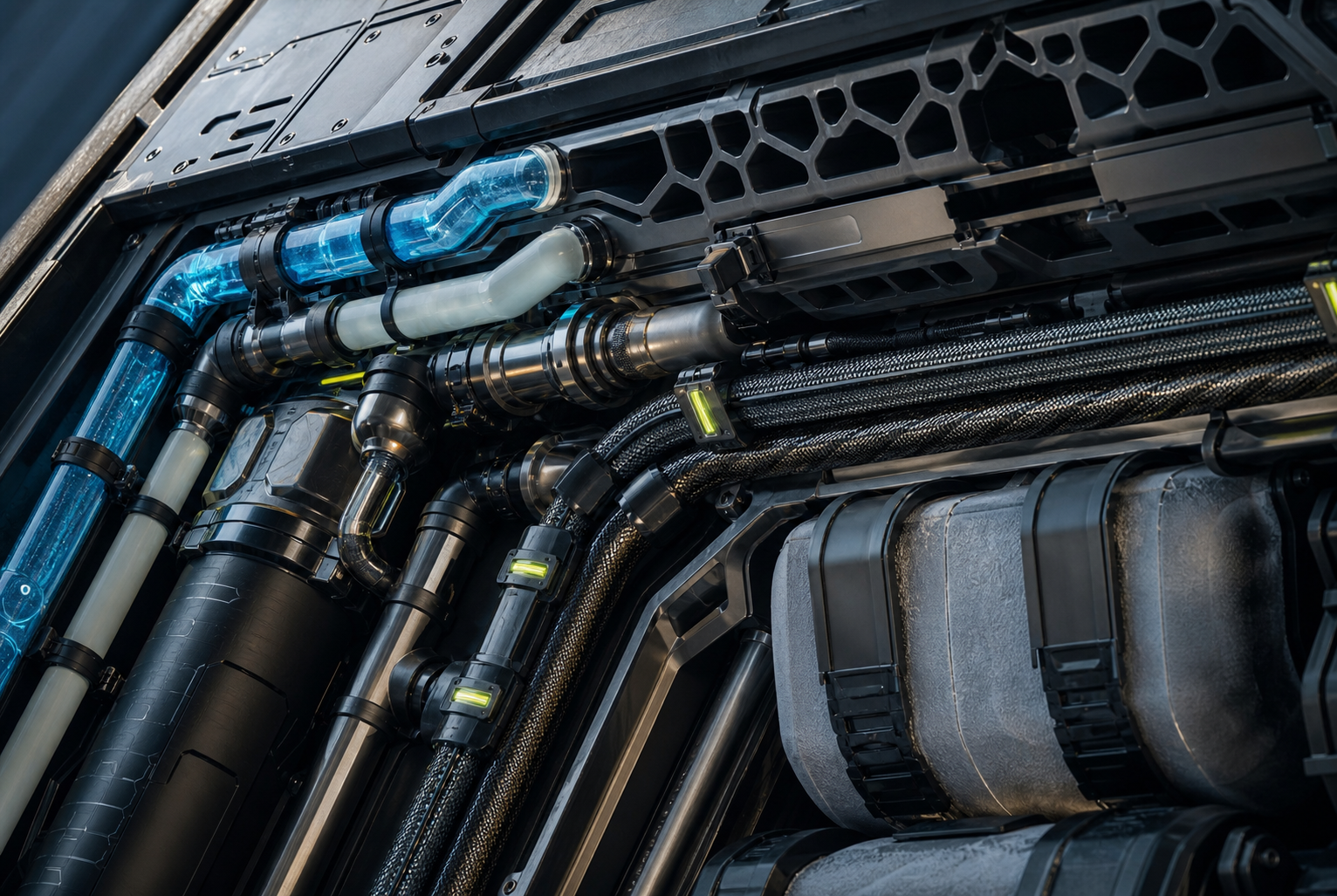
Detailed AETHER service bay with fluid and power routes
Service access / loop 03No decorative conduits
Design rule / 03.1

If a crew cannot isolate, inspect, and replace it, the loop is not resilient.

  • 01Local shutoff at every dock
  • 02Visible leak and contamination paths
  • 03Repair access sized for gloved work
  • 04No single elegant failure point
04 / Mini-ScoutComfort is mission infrastructure

Small enough to test.
Human enough to inhabit.

A 2–4 person demonstrator translates the city’s architecture into a scale where every cubic meter, maintenance path, and bad night matters.
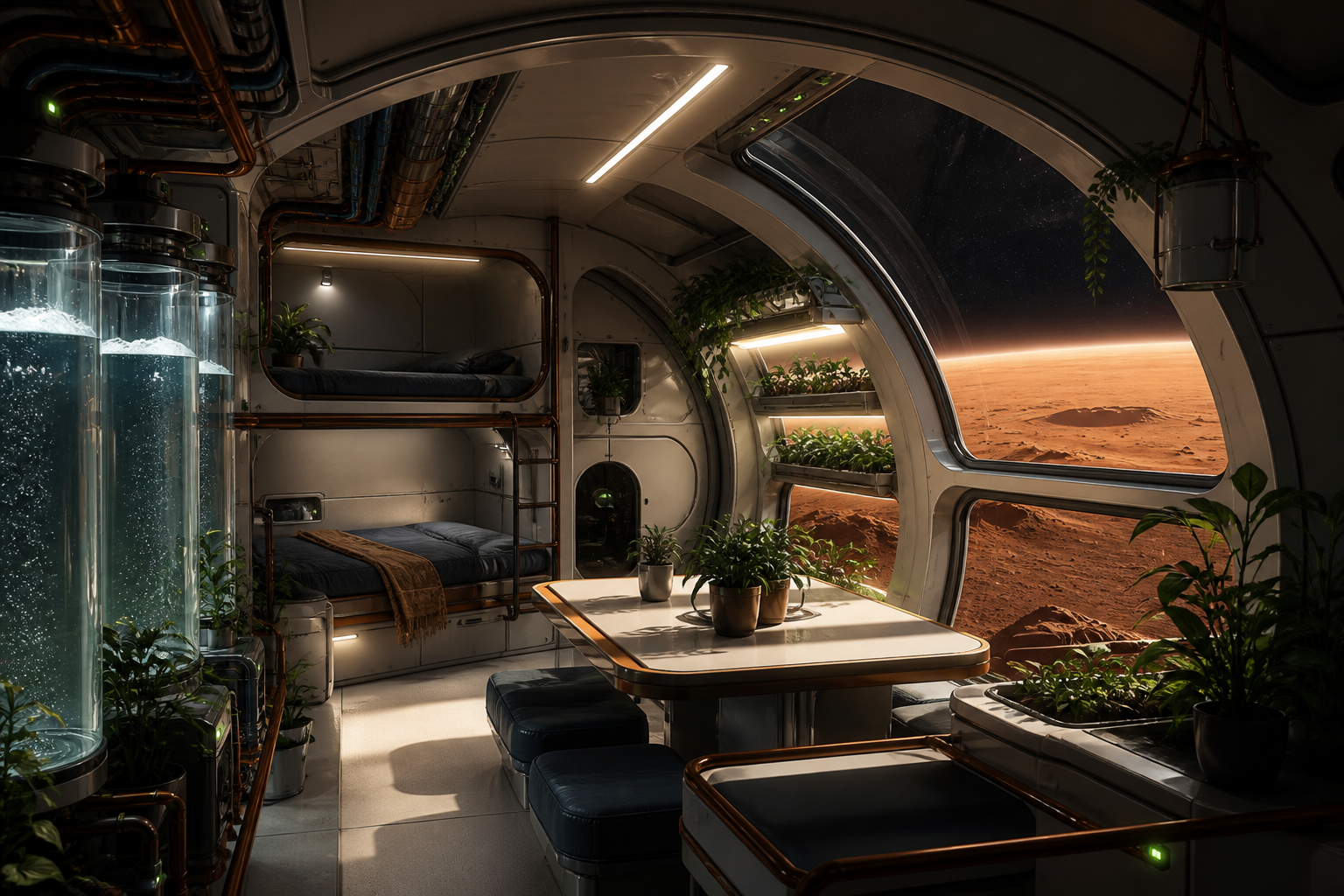
Mini-Scout habitat with bunks, plants, water columns and a Mars panorama
Habitat study / crew target 02–04Original / 2026
01Closed-loop ambition

Water, air, food growth, waste, and heat are measured as balances—not slogans.

02Solar first

Generation is paired with fast and long-duration storage; backup remains a mission decision.

03Water shielding

Stored mass can be routed where shielding value is highest, subject to structural analysis.

04Restorative interior

Light, plants, acoustics, privacy, and shared ritual support the crew system.
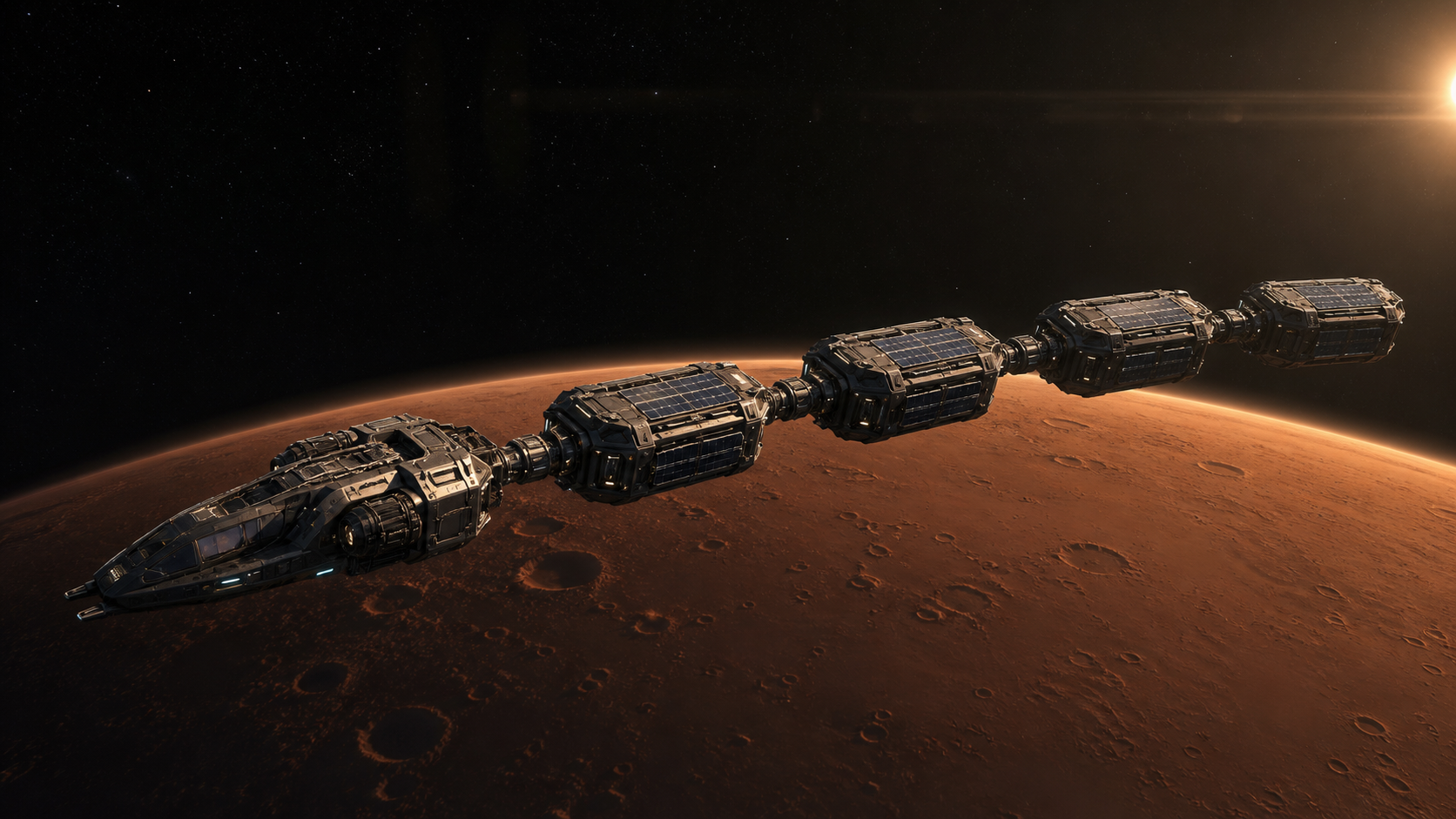
A Mini-Scout and four connected reserve modules passing above Mars

Caravan architecture / reserve is freedom

Do not ask one hull to be everything.

Four external reserve pods distribute water, oxygen, hydrogen, spares, power, and storm shelter. They can travel as a convoy, become independent depots, or form the service spine of a field base.

WaterOxygenHydrogenPowerSparesShelter
05 / Mission sequenceFour gates / no skipped physics

From weather
to another world.

Each realm changes the problem. The form may remember itself; the engineering cannot simply be copied upward.

P—0101

Cloudline

Prove the smallest loop first.

Atmospheric Mini-Scout demonstrators study moisture collection, thermal behavior, autonomous docking, and recoverable flight operations.
Concept / test definition
P—0202

High atmosphere

Join useful modules without losing grace.

Habitat, collector, energy, port, and field modules share resources through sealed interfaces while retaining the ability to isolate safely.
Architecture study
P—0303

Orbit

Assemble the caravan beyond weather.

Orbital variants exchange buoyant-volume priorities for pressure, radiation, thermal, propulsion, and long-duration life-support constraints.
Mission modeling
P—0404

Mars

Arrive with reserves, not bravado.

A crewed Mini-Scout travels with independent reserve pods that can become depots, shelters, or the first service spine of a polar field base.
Long-horizon vision
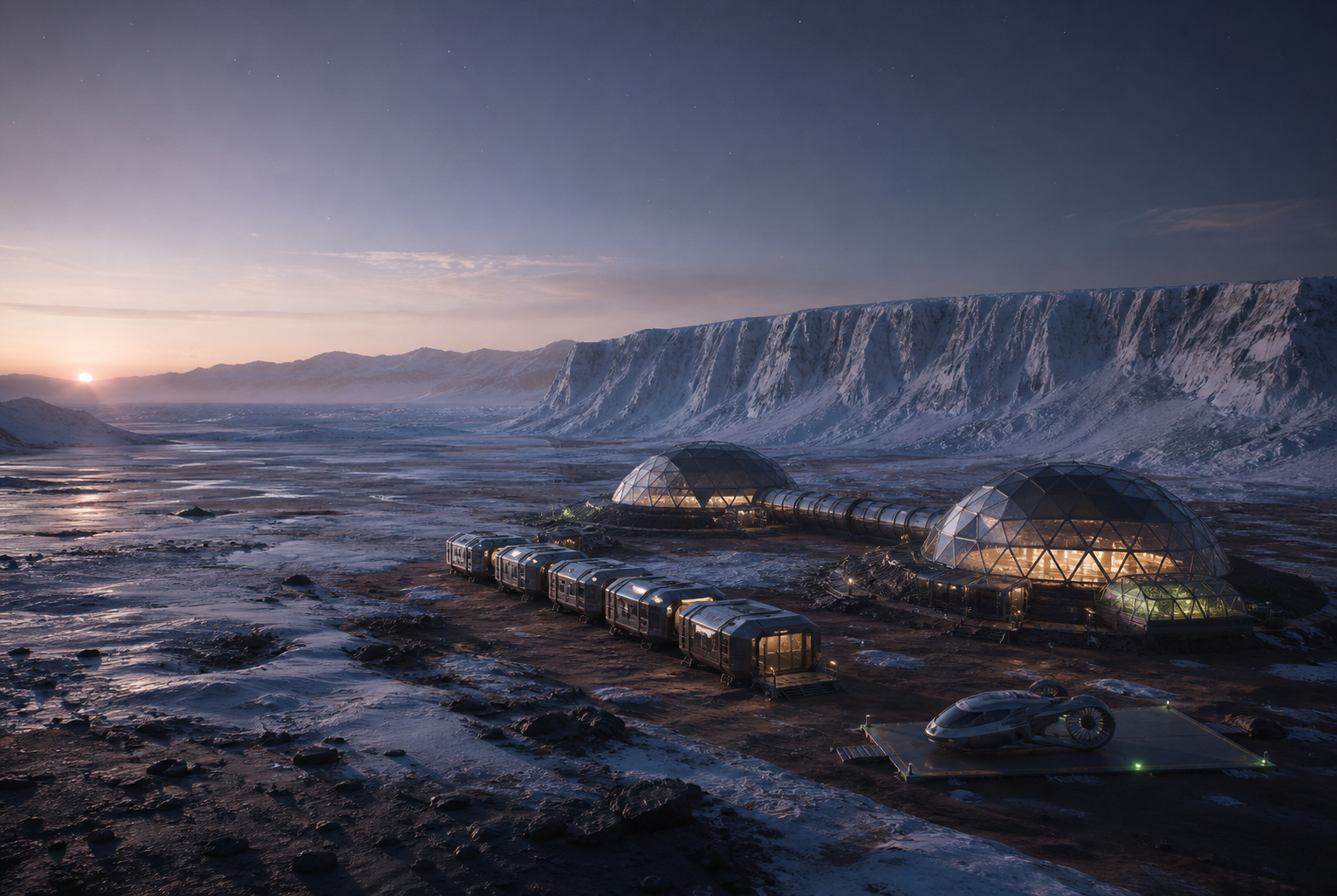
A future polar Mars field base with connected geodomes and a Mini-Scout
Destination study / polar ice fieldLong-horizon concept
06 / Field archive15 originals / 09 source studies

Many forms.
One question.

Which architecture earns the right to become real? Open any study for a closer view. Source concepts are visual research, not technical drawings.

07 / Development forgeEvidence before scale

You do not build the city first. You build confidence, one failure surface at a time.

Development architecture / concept study

These scenes show how the program could move from questions to calibrated models, rigs, ground articles, uncrewed demonstrators, robotic assembly, and only then a human decision gate.

Program rule / 07.1

One program.
Three vehicle families.

The atmospheric demonstrator, orbital caravan, and Mars surface habitat may share a design language and qualified module standard. They do not share one universal flight shell.

The shared rune is the interface.
01AtmosphereLift / weather / recovery
02OrbitVacuum / radiation / assembly
03MarsCargo / dust / surface habitat

Development sequence / gates 00–08

Make reality answer in the least expensive language first.

Paper before simulation. Simulation before rigs. Rigs before an integrated article. Uncrewed evidence before human exposure. No gate inherits proof from a different environment.

G—0000
Requirements ledger

Reject impossible budgets before they become beautiful hardware.

Keep atmosphere, orbit, and Mars as three vehicle families. Close mass, lift, power, thermal, consumables, reserves, and recovery for each one.

Evidence / Plausible marginsA model is not feasibility evidence.
G—0101
Digital trade studies

Spend simulation to decide which questions deserve metal.

Compare forms, interfaces, weather cases, trajectories, failures, heat paths, and servicing concepts. Calibrate every digital twin against later physical data.

Evidence / Testable architectureLabel every result simulation.
G—0202
Materials + subsystem rigs

Break coupons, seals, collectors, loops, and deployment mechanisms early.

Study pressure-shell behavior, compatibility, leak detection, water treatment, energy losses, heat rejection, solar deployment, and bounded automation separately.

Evidence / Measured component dataLicensed facilities / no crew.
G—0303
Integrated ground article

Make the Mini-Scout live on the ground before asking it to fly.

Run long endurance campaigns for resource balances, maintenance access, software safing, degradation, isolation, habitability, and recovery from faults.

Evidence / End-to-end ground evidenceGround endurance is not flight safety.
G—0404
Uncrewed atmosphere

Fly the smallest recoverable demonstrator inside a controlled envelope.

Measure stability, propulsion demand, weather sensitivity, moisture yield, icing, navigation, emergency modes, and recovery before any passenger architecture is considered.

Evidence / Repeatable flight dataUncrewed / controlled range.
G—0505
Uncrewed docking pair

Prove that two useful pieces can become one safe system.

Demonstrate alignment, capture, structural load transfer, sealed interfaces, center-of-mass control, local isolation, undocking, and independent recovery.

Evidence / Interface qualification pathOne pair is not a flying city.
G—0606
Orbital technology demo

Re-architect the space branch for space instead of copying the sky hull upward.

Test thermal-vacuum behavior, microgravity fluids, radiation tolerance, solar deployment, docking sensors, storage, debris awareness, and autonomous safing.

Evidence / Space-specific evidenceNo atmospheric descent claim.
G—0707
Robotic caravan + Mars cargo

Let machines assemble, operate, fail, and recover before people depend on them.

Run months-long uncrewed caravan operations, then send cargo precursors to commission power, communications, shielding, dust control, and a qualified pressure habitat.

Evidence / Autonomy + site readinessCargo and robotics precede crew.
G—0808
Crew decision gate

Human flight is a decision earned by evidence—not the final frame of a render.

Independent review, human-rating, rescue and abort capability, medical operations, lifecycle verification, reserves, and return capability must close before commitment.

Evidence / Independent qualificationA gate, never a promise.
Boundary / concept studyThis is a development map—not a construction drawing, operating procedure, or claim of flight-qualified hardware.
08 / Program integrityVision with boundaries

An interesting architecture is not yet evidence.

Concept art opens the door. Testing decides what may cross it.

This website presents a design and research vision. The vehicles, resource loops, materials, mission paths, and environments shown here are not flight-qualified systems and are not claims of demonstrated safety or performance.

Progress requires simulation, subsystem prototypes, materials and pressure testing, independent safety analysis, human-factors work, environmental review, regulation, and mission validation.

SimulationPrototypeTestReviewQualify